- Never share passwords, PINs or one-time authentication codes.
- Verify unexpected banking messages by contacting your bank directly.
- Be cautious of urgent requests to transfer money or confirm account details.
- Check website addresses carefully before entering banking credentials.
- Enable multi-factor authentication and account alerts where available.
You are here:
Main Content
-
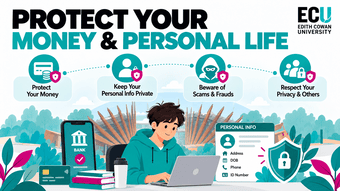
Protect your money and personal life
Protect Your Money & Personal Life
Online shopping, banking, gaming and accommodation searches often involve money, personal details and account information, making them common targets for scammers. Cybercriminals may create fake websites, impersonate trusted organisations or offer deals that appear legitimate to pressure people into acting quickly. Taking time to verify websites, payment requests and unexpected offers can help protect both your finances and your personal information.
Online Shopping
Fake online stores and marketplace listings can be designed to look almost identical to legitimate businesses. Scammers may advertise heavily discounted products, copy real websites or request payment using methods that offer little protection. Before making a purchase, check that the seller and website are genuine.
Online Banking
Banking accounts are valuable targets because they provide direct access to money and sensitive financial information. Scammers may impersonate banks through phone calls, emails or text messages and claim there is an urgent problem with your account. Legitimate organisations should never require you to disclose passwords or authentication codes through an unexpected request.
- Use the official banking app or website.
- Never share passwords, PINs or MFA codes.
- Avoid clicking banking links in unexpected messages.
- Regularly check transactions and account activity.
- Contact your bank directly if something seems suspicious.
Accommodation Scams
Students looking for accommodation can be targeted with fake rental listings, copied property photos and people pretending to be landlords or agents. Victims may be pressured to transfer a bond or rent before seeing the property, particularly when a scammer claims there are several other interested applicants.
- Verify the property and person advertising it.
- Avoid paying before confirming the accommodation exists.
- Be cautious when someone pressures you to act immediately.
- Compare listings across trusted property websites.
- Question prices that are significantly cheaper than similar properties.
Gaming Scams
Gaming accounts can contain valuable items, payment details and personal information. Scammers often use fake giveaways, trades, account warnings or offers of free in-game currency to convince players to click malicious links or provide their login details.
- Use only official game stores and marketplaces.
- Never give another player your login details.
- Enable MFA on gaming accounts where available.
- Avoid links from unknown players.
- Be cautious of free currency, skins or item offers.
Giveaways & Prize Scams
Fake giveaways use the promise of free products, money, tickets or digital items to attract attention. Victims may be asked to enter login details, provide personal information, click a suspicious link or pay a small fee to claim a prize they never actually won.
- Verify competitions through the organisation's official page.
- Be suspicious of prizes you did not enter to win.
- Never pay a fee to receive a supposed free prize.
- Avoid entering passwords through giveaway links.
- Be cautious of accounts impersonating brands or influencers.
Password Reuse
Reusing the same password across several accounts means one compromised account can put many others at risk. If an attacker obtains a username and password from a breached service, they may automatically test those same details against email, banking, gaming and social media accounts.
- Use a unique password for every important account.
- Never reuse your email or banking password elsewhere.
- Consider using a trusted password manager.
- Enable MFA wherever possible.
- Change reused passwords if one service is compromised.